Halford
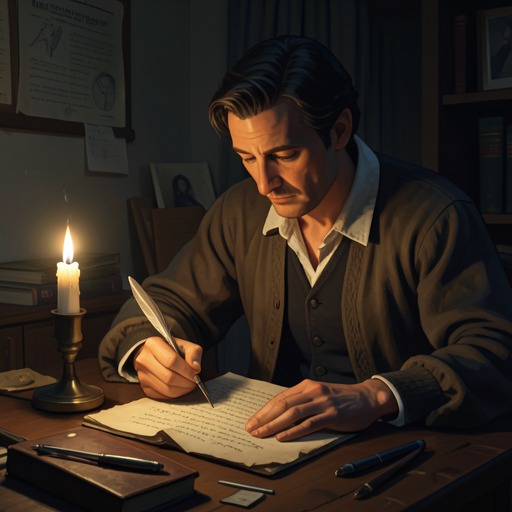
The Tenant of Wildfell HallHalford is Gilbert Markham’s correspondent and the implied reader of the extended account that frames the novel. He never enters the narrated events, but Gilbert’s repeated addresses to him give the story the shape of a personal exchange: Gilbert presents his past, shares Helen Graham’s manuscript, and anticipates Halford’s response. The frame makes Halford more than a silent addressee; he represents the reader whose understanding must be revised as documents and recollections disclose what Gilbert initially does not know.
Identity and Place in the Narrative
The novel identifies Halford through Gilbert’s letters rather than through a narrated biography. At the end of his first installment, Gilbert bids him farewell, calls the account a payment on a debt, and offers to send the rest at leisure. The joke about whether Halford would rather remain a creditor than receive the heavy “coins” of Gilbert’s story establishes their correspondence as an ongoing exchange, while Gilbert’s signature confirms who is writing. Nothing in the available account gives Halford a separate plot or describes his life beyond this friendship and his place as recipient.
Gilbert’s direct questions make the relationship feel familiar and conversational. Reflecting on the standards of domestic virtue, he asks whether Halford’s happy wife expects no more than a husband who provides good dinners and does not delay them. The question suggests that Gilbert knows something of Halford’s married household and uses it as a point of comparison, but the exchange does not supply further details about Halford’s wife or their life together. Halford’s function is therefore intimate but deliberately limited: he is close enough to be addressed familiarly, yet the narrative keeps its attention on Gilbert and Helen.
The Correspondence as Narrative Frame
Gilbert parcels out his narrative as installments and repeatedly acknowledges the person waiting to receive them. That arrangement places Halford at the outer level of the novel, before Gilbert’s account opens into Helen’s written history. The structure matters because Gilbert is not simply recounting events as they happened: he selects what to send, comments on what he has found, and decides how much of Helen’s account to reproduce. Halford receives the resulting story, but does not control its contents.
When Helen gives Gilbert a thick manuscript volume, she first tears away a few leaves from its end, hands him the remainder, and asks him not to reveal what it tells to anyone. After leaving the house, she calls him back to insist that he return it when he has read it and trust it to his honour. Gilbert describes taking the manuscript home, first glancing through it and then settling down to read it fully. He then tells Halford that he has the document before him and will provide its contents rather than an abbreviation, with the possibility of omitting a few passages. This transition shifts the narrative’s center from Gilbert’s recollection to Helen’s first-person record while keeping Halford as the recipient of both layers.
The manuscript’s missing ending is itself a visible limit on what Halford—and the reader—can know at that point. When Gilbert reaches the fragment concerning the “fine gentleman and beau” of the parish, he finds the rest torn away and complains that the account stops just as Helen was about to mention him. He infers that she meant Gilbert, but admits that the surviving words and his memory of her manner toward him shape that conclusion. The torn pages make Helen’s account materially incomplete; Gilbert’s interpretation fills the gap, but cannot turn inference into certainty.
What Gilbert Chooses to Share
The outer correspondence also shows Gilbert using documents to bring Halford into episodes beyond his own retrospective narration. Near the end, he reads Helen’s letter from Grassdale, dated November 4, which reports that Arthur Huntingdon is very ill but not dying or in immediate danger. The letter describes a household in disorder, where Mrs. Greaves, Benson, and the other decent servants have left. Gilbert’s willingness to pass the letter along gives Halford access to Helen’s own account of the crisis, rather than only to Gilbert’s summary of it.
The documents do not erase Gilbert’s editorial role. Helen asks that the manuscript remain confidential, and the account preserves that request as it is transmitted to Halford. Gilbert also signals that he may withhold a few passages. The reader consequently encounters a layered testimony: Helen writes from within her experience; Gilbert receives, reads, and selects from that writing; and Halford receives Gilbert’s presentation. The frame offers a route toward the truth of Helen’s past while keeping the acts of selection and trust in view.
Gilbert’s Retrospective Self-Presentation
Gilbert uses the letters not only to report events but to reassess the character he displayed in them. Looking back on his early relations with Mr. Lawrence, he tells Halford that the two men were both too touchy and too ready to take affront where none was intended. He contrasts that earlier susceptibility with his present claim to be more cheerful and more indulgent toward his neighbours, adding that Halford can bear witness to the change. Halford thus serves as a measure of Gilbert’s later self-understanding: the correspondent is presumed to know the man Gilbert has become, even though the novel supplies no independent account from him.
Gilbert also uses the frame to manage pace and audience expectation. As he brings the narrative to a close, he admits that anyone other than Halford might say the story has already grown too long, yet promises a few more words for Halford’s satisfaction. He anticipates that Halford will sympathize with the older woman and want to know what became of her. This closing move presents the final addition not as an impersonal appendix but as a personal favor to a particular reader. The correspondence therefore gives the narrative both its retrospective tone and its domestic endpoint: Gilbert recounts the history to a friend, then returns to the prospect of Halford’s annual visit with Rose, when they will leave the city for a season of relaxation and social retirement together.